Q & A
When I was probably 10 or 12, my father made my younger brother and me write weekly stories. My brother hated doing it and could barely get his done. I wrote mine in minutes and couldn’t wait to write the next one. My literary tastes at the time were Nancy Drew and the Bobbsey Twins, so I wrote my tales, complete with dialogue, like those books.
In retrospect, it seems like an easy, almost inevitable slide. During one summer as a high school exchange student in Europe, I wrote short stories for my hometown newspaper, embarrassingly sophomoric to be sure, but a thrill for a teenager.
That summer, onboard the student ship heading home, I stumbled into editing the daily newspaper, emerging every night literally covered in mimeograph ink. At Wellesley, I wrote more serious stories, including music criticism, for the college paper.
A few years later, while supposedly en route to a doctorate in psychology, a friend lured me into applying for a job as a reporter for The Lowell Sun. I was hooked! The commute was long, the pay terrible ($89 a week), the hours horrific, especially with a young son at home – but I loved it, interviewing people from all walks of life, digging hard to find the truth, and the thrill of a good scoop. On the night shift, I’d often stand in front of the then-modern UPI machines, spellbound as stories poured in from all over the world.
There were many, but I’d have to say the most meaningful was at The Boston Globe way back in 1996, when I wrote “Choosing a Good Death,” a long, special feature about the importance of hospice care. The story, and the subsequent video documentary, featured a brave young woman dying of breast cancer in hospice care. The Globe story won many awards and the video documentary won a George Foster Peabody Award. That story not only deepened my sense of the preciousness and fragility of life, but also made me realize the enormous value of patient-centered medicine.
It was sheer fun! The newsroom was like a little village filled with very smart, interesting neighbors, sitting cheek by jowl, eavesdropping on each other’s phone calls and working like crazy to put the paper out every day. It was wonderful – the importance of what we were doing and the thrill of being part of it all.
I left the Globe physically in 2000 in part to take care of my husband, who had cancer. But I kept writing my weekly column as a Globe freelancer until I suddenly began having severe neck pain. As I dealt with that pain, the science-writer in me became fascinated by the phenomenon of pain itself. So I wrote my first book, “A Nation in Pain,” for Oxford University Press. Book writing was fun, but shockingly different, I discovered, from writing columns. With my weekly, syndicated columns, I could reach many, many thousands of people, with book writing, vastly fewer.
Hmmm. My first and second pain books were rewarding because of the sheer importance of the subject: millions of Americans live in chronic pain, a fact too often obscured by the intense focus on the opioid epidemic.
My “Exercise is Medicine” book is a favorite because, as a competitive swimmer, I love exercise and the benefits it bestows. On the other hand, “CRISPR’d,” my first foray into thriller writing, was a blast, and a huge challenge for a journalist. Instead of telling the truth right up front, clearly and concisely so as not to confuse readers, with a thriller you have to obscure the truth and dangle hints and red herrings, all while trying to remember which character knew what when.
Then again, my memoir, “Let the More Loving One be Me,” was the most personally meaningful because I revealed the story of my childhood, a story horrifyingly similar to that of so, so many women.
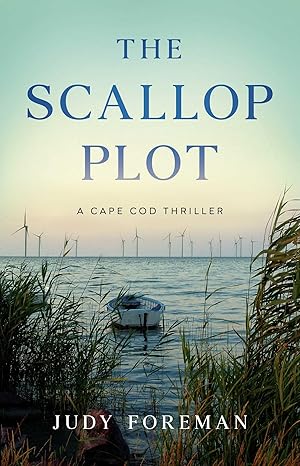
And yet, my all-time favorite may turn out to be my new thriller, “The Scallop Plot.”
Stay tuned. I’ll let you know.
I enjoy Robin Cook, Tess Gerritsen, Michael Palmer, Michael Crichton, Patricia Cornwell, Ken Follett, Harlan Coben, Nelson DeMille, on and on. But of all those, Robin Cook is my favorite.
You bet.